Why smart teams walk out of meetings misaligned, and what exceptional leaders do differently. The Illusion of Alignment There’s a moment that happens in organisations every single day, and it’s so ordinary that no one ever questions it. A meeting ends. In a physical room, people gather their laptops, exchange polite nods, and say things[…]
Posts by:
Maurice Decastro


We discuss public speaking as if it’s a performance, a moment where you stand up, deliver your message, and hope the audience receives it. Beneath that familiar description lies a truth most people feel but never express. The moment you start speaking, you assume responsibility for the audience’s thoughts as they develop. It’s subtle, unseen,[…]

How the Stories We Tell Ourselves Sabotage Our Presentations — And How to Break Them for Good
General Feb 18, 2026
Many of us walk into presentations carrying more than slides. We carry quiet, inherited, unexamined beliefs about who we’re allowed to be when other people are watching. They feel like personality traits and sound like caution, but they behave like invisible constraints, shaping our presence long before we speak. You can feel them the moment[…]

The Real Measure of a Presentation Most presentations are judged by the wrong criteria. People focus on confidence, charisma, slide design, and whether the audience claps at the end, as if these superficial signals reveal anything truly meaningful about impact. They don’t. A presentation’s sole legitimate purpose is to influence what happens next. That influence[…]

There’s a moment when authenticity quietly slips out of the meeting or conference room. It happens the instant some professionals stand to present. You can see it in the shoulders, the breath, the way the eyes shift. It feels like a subtle tightening and recalibration of the self. Seconds earlier, this person was relaxed, conversational,[…]
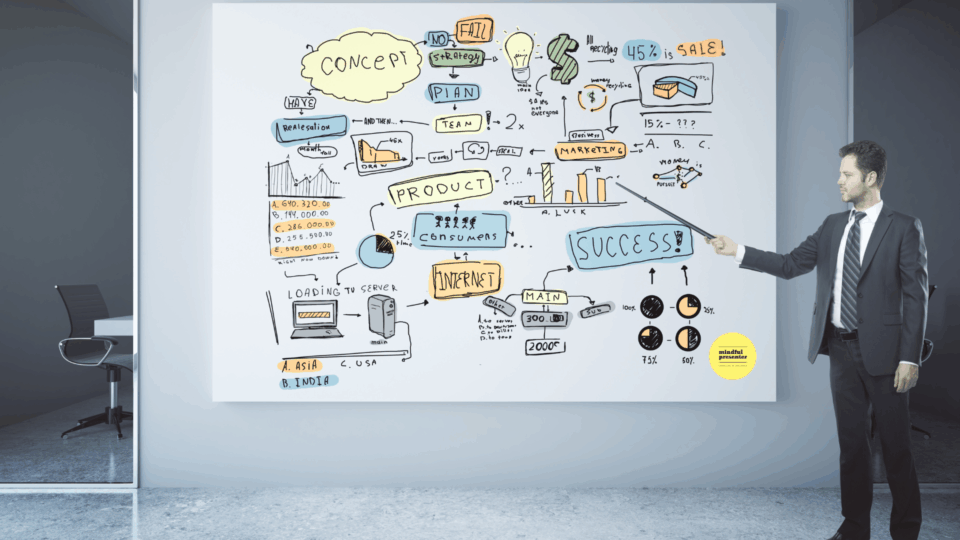
We trust our slides to support us, yet in many presentations, they quietly do the opposite. In fact, for many professionals, slides are quietly and consistently ruining their presentations. Not because slides are bad, but because of what we unknowingly ask them to do. We treat slides as scripts, safety nets, teleprompters, memory aids, and[…]
