
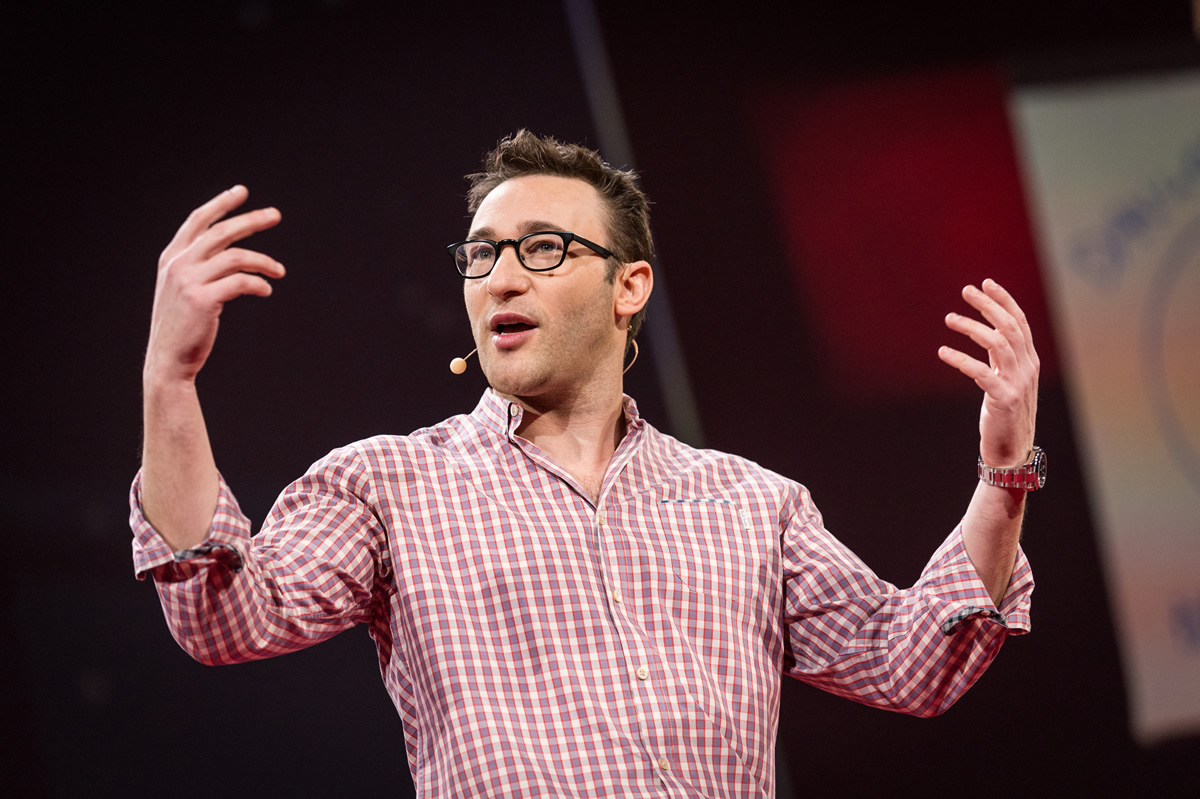
My son knows my passion for public speaking, so when he pointed me toward a Simon Sinek video, I was excited. I admire Sinek. I’ve learned a great deal from him, but fifteen minutes in, I felt something I didn’t expect: discomfort.
Not because he’s wrong about everything, but because his conclusions about millennials felt incomplete and, in some places, unfair.
He offers four reasons why he believes so many millennials are unhappy at work:
- Parenting
- Technology
- Impatience
- Environment
Let’s explore each one, honestly, compassionately, and with a little more nuance.
-
Parenting — Are We Really “Failing” Our Children?
Sinek suggests that many millennials grew up hearing they were “special,” only to discover in adulthood that they’re not. That their mothers can’t get them a promotion. That their self-image collapses.
My first reaction was: Oh no… what have I done?
I’ve told my son he’s special for as long as he’s been alive, not as a tactic, but because it’s the truth I see in him. That belief has never wavered, and it never will.
Does that make me a bad parent?
Did I put him on a pedestal because my own parents never did?
Perhaps. Perhaps not, but here’s what I know:
Believing a child is special isn’t the issue; not helping them understand what to do with that specialness is.
I work with young people who struggle at school. I don’t teach them presentation skills; I teach them personal impact. Every time I leave a workshop, I hope someone else will tell them they’re special too. Not because they’re entitled to success, but because they’re entitled to possibility.
We are all special, not superior or more deserving, just unique and able to make a difference in our own small way. If that doesn’t make us special, what does?
So please, never stop telling your child they’re special, but also teach them how to turn that belief into a contribution.
-
Technology — The Dopamine Trap Isn’t a Millennial Problem
Sinek compares social media to smoking, drinking and gambling. He’s not wrong about dopamine, but he’s wrong about who struggles with it.
I’ve felt the grip of smoking, drinking and gambling as a young man, and today, I feel the pull of social media. This isn’t a millennial issue; it’s a human issue.
We’ve been chasing dopamine since the beginning of time, and social media is just the latest delivery system.
The truth is that many millennials handle it better than we do; my son certainly does.
The deeper problem isn’t addiction, it’s connection.
Sinek argues that friendships today are shallow, that people cancel when something better comes along, and that deep relationships are rare because we don’t practise the skill. He’s not wrong, but this isn’t a millennial flaw.
The other day, bored on a train, I opened Facebook to see who I could “chat” with. A dozen friends were online. I didn’t want to talk to any of them.
It made me wonder: were these really friends, or just digital silhouettes?
Superficial connection isn’t a millennial flaw; it’s a symptom of the digital age we all inhabit. We’re more connected than ever, but for many of us, that connection has never been shallower.
This isn’t generational. It’s cultural and a by‑product of a world where contact is constant, but depth is optional.
-
Impatience — The Most Misunderstood Millennial Trait
Sinek talks about instant gratification, but impatience isn’t new. It’s not a millennial invention; it’s a human inheritance. I remember being impatient long before smartphones, Wi‑Fi or one‑click options existed.
At 13, I was impatient to grow up.
At 18, impatient to be taken seriously.
At 25, impatient to prove myself.
At 30, impatient for life to finally make sense.
Impatience has always been the drumbeat of youth, the restless energy that pushes us toward the next chapter before we’ve finished the last. It’s not a flaw, it’s fuel.
I couldn’t wait for my first girlfriend, my driving test, my first job, my first home.
Impatience is the engine of youth, and thank goodness for it. Young people today aren’t more impatient; they’re less willing to tolerate what doesn’t make sense.
When I started work, I saw things that were inefficient, costly, demoralising and absurd. So, I wrote a report and sent it directly to the executive team. My manager wasn’t thrilled, but it changed the company and my career.
Was it impatient? Absolutely.
Was it necessary? Without question.
We don’t need less impatience; we need impatience with purpose.
-
Environment — The One Point Where Sinek Is Absolutely Right
Sinek argues that we place young people into corporate environments that value numbers over humans, short-term gains over long-term growth, and profit over purpose.
He’s right, but again, this isn’t new; it’s just accelerating.
We created a world that demands:
- quality
- speed
- innovation
- excellence
- at the lowest possible cost
We want everything now, and we rarely consider the human cost of delivering it.
Leaders lead the way they were led; boards demand more, CEOs absorb the pressure, and managers chase the numbers they’re measured against. All the while, organisations repeat the familiar line that “people are our greatest asset,” even as their behaviour tells a very different story.
This isn’t a millennial problem; it’s a leadership and cultural problem.
The Real Issue — And the Real Opportunity
Sinek warns of rising despair, lack of fulfilment, and even suicide.
That pains me deeply, because despite the challenges, there has never been a better time to be alive.
The issue isn’t parenting, technology, impatience, or the environment; those are just the conditions of modern life.
The real issue is meaning
Walk through a cemetery and read the gravestones. Don’t focus on the bodies, focus on the dreams that never made it past intention. The yes, but’s. The if only’s, and the what if’s. A field of unfinished stories, each one a reminder that the greatest tragedy isn’t death itself, but the possibilities we leave untouched while we’re alive. We’ve been searching for meaning for tens of thousands of years.
The difference now is that we finally have a generation unwilling to settle for anything less, and that is something to celebrate.
The Line That Changed My Life
Over 35 years ago, someone told me:
“The only people who need to be motivated are those who can’t see a future.”
That sentence has proven true again and again, and it leads me to this:
Your job, my job, our job is to help people see a future worth moving toward. Not just millennials, employees, or our children; everyone, because when people can see the future clearly, motivation takes care of itself.
Watch the video here
Whilst I may not share some of his thoughts on this topic, Simon Sinek is still one of my favourite public speakers.
If you need help with your presentation and public speaking skills:
– Book yourself onto a powerful public speaking course.
– Invest in some really good one to one public speaking coaching.
– Get yourself some excellent presentation training
Image Courtesy of: Flickr.com

Leave a comment
You must be logged in to post a comment.