
Throughout history, American presidents have delivered some of the world’s most memorable and influential speeches. Their words have shaped national identity, offered reassurance in moments of crisis, and inspired generations to act.
Barack Obama often spoke of shared values and collective purpose.
John F. Kennedy challenged citizens to contribute to something larger than themselves.
Franklin D. Roosevelt used clarity and calm to steady a nation in turmoil.
These speeches endure not simply because of the policies behind them, but because of the way they were communicated, with conviction, clarity and emotional intelligence.
With that in mind, a natural question arises:
Does a President need to be an inspirational speaker?
Some argue that leadership is about policy rather than presentation. Others believe that without effective communication, even the strongest ideas find it hard to gain traction.
Public speaking is not the whole of leadership, but it is one of its most visible expressions.
As the 2016 presidential race narrowed to two candidates, the world had a unique opportunity to observe two very different communication styles on the global stage.
Communication Style Under the Spotlight
Donald Trump
Donald Trump’s campaign drew global attention for its direct, forceful communication style. His rallies were marked by high energy, strong emotion and a distinctive use of repetition and emphasis.
Regardless of how people interpreted his words, one thing was clear: his delivery created impact.
It’s worth considering a hypothetical scenario. If the same statements had been delivered:
- in a monotone voice
- without movement or expression
- without vocal energy
- without conviction
…would they have resonated with the same number of people?
Probably not.
This illustrates a fundamental truth about public speaking: content matters, but delivery determines how that content lands.
People respond not only to what a speaker says, but to how deeply they appear to believe it.
Hillary Clinton
Hillary Clinton’s communication style offered a different kind of presence. In major speeches, she often demonstrated:
- controlled pacing
- measured tone
- structured argument
- emotional restraint
- strategic storytelling
Her Democratic National Convention speech, for example, showcased a blend of clarity, preparation and composure, qualities that many audiences associate with credibility and steadiness.
The same hypothetical question applies here:
Would her message have resonated if she appeared uncomfortable, disconnected or unsure?
Probably not.
Effective communication is not about being loud or dramatic. It’s about being clear, confident and connected.
What Leadership Research Tells Us
In The Leadership Challenge, Kouzes and Posner conducted decades of global research asking people what they most value in a leader.
Across continents and cultures, four qualities consistently rose to the top:
- Honest
- Forward‑looking
- Inspiring
- Competent
These qualities are not tied to political ideology; they relate to human expectations of leadership, with communication serving as the link that unites them.
A leader may have strong ideas, but without the ability to articulate them in a way that feels honest, forward‑looking, inspiring and competent, those ideas struggle to gain momentum.
So, does a President Need to Be an Inspirational Speaker?
Public speaking alone does not qualify anyone for leadership, but leadership without communication is leadership without influence.
A President, like any leader, must be able to:
- articulate a vision
- build trust
- unite people around shared purpose
- communicate clearly in moments of uncertainty
- inspire action when action is needed
History shows that the ability to speak with clarity and conviction can shape not only public opinion but national direction.
Inspirational speaking is not the whole job, but it is undeniably part of it.
Your voice is one of your greatest leadership tools — and learning to use it well can change everything.
If you’d like to explore more about leadership communication:
– Book yourself onto a powerful public speaking course.
– Invest in some excellent one-to-one public speaking coaching.
– Get yourself some excellent presentation training
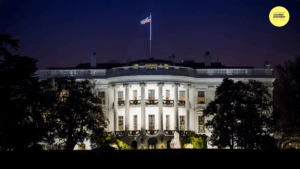
Image: Courtesy of Canva.com

Leave a comment
You must be logged in to post a comment.