
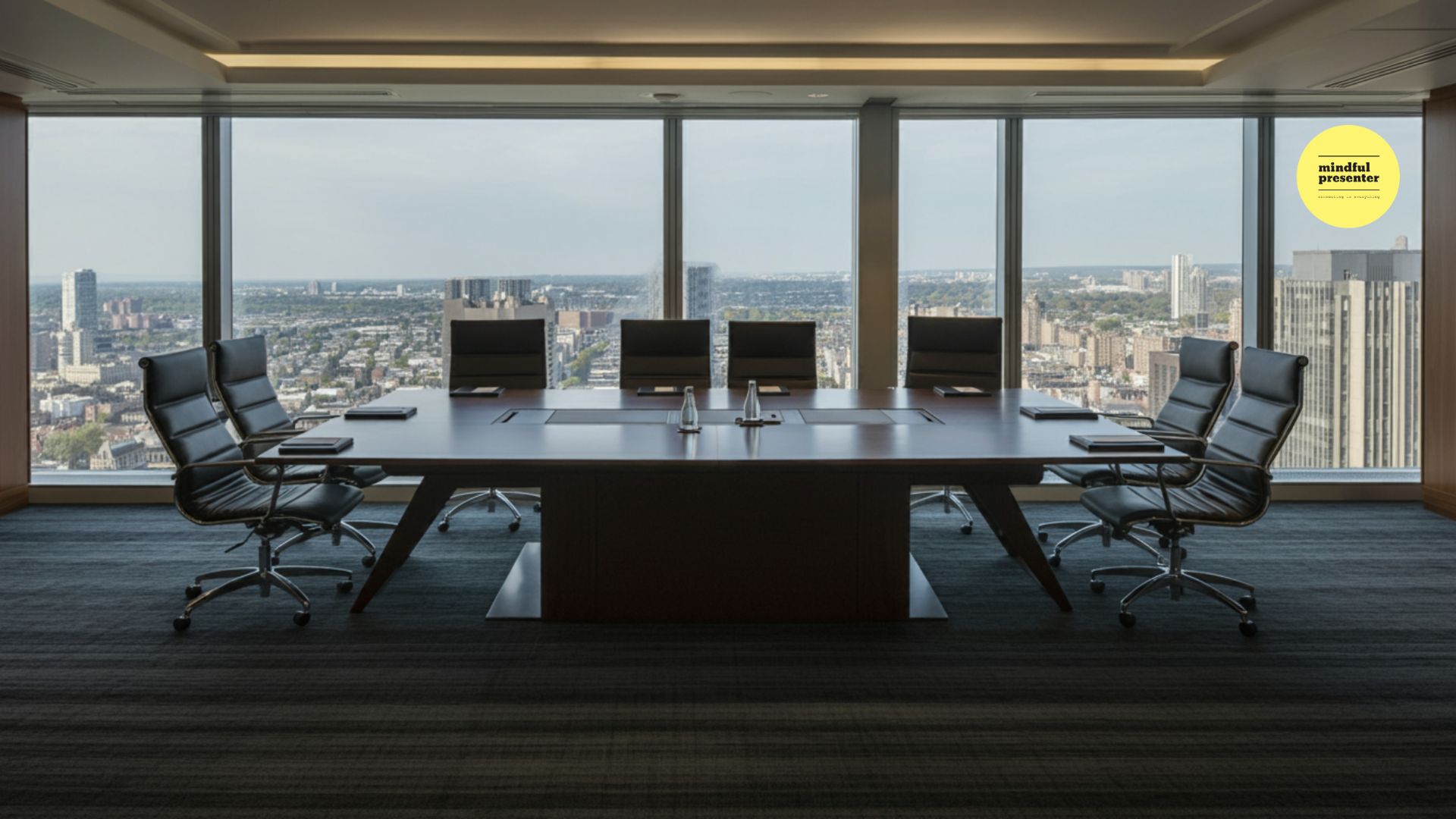
A Modern World, Outdated Meetings
For all the talk of transformation, agility, and modern leadership, many boardrooms still operate as if nothing fundamental has changed in decades.
People, organisations, and the world have all evolved. Yet in many places, the way meetings are held, where some of the most critical decisions are made, has barely changed. Across teams, significant time and brainpower go into creating detailed board papers to accelerate thinking. Complex financial, operational, and strategic information is reviewed so leaders arrive prepared, aligned, and ready to make confident decisions.
In principle, this provides clarity before the meeting even begins.
When Meetings Restart the Work
In practice, the meeting often restarts that process.
Discussion returns to material already circulated, rebuilding shared understanding in real time. The conversation moves around the information rather than through it.
You can usually tell within the first ten minutes whether the meeting will be a decision-making session or a live reconstruction of the board pack.
Nothing seems broken; the agenda is followed, papers are referenced, and the structure appears sound. Yet beneath that surface, much of senior time is spent not on making judgments but on re‑establishing understanding that should already be in place.
The Hidden Distortion
This creates a subtle but persistent distortion: the meeting becomes less about advancing decisions and more about reconstructing the conditions required to make them.
Once that shift occurs, effectiveness is no longer determined by the quality of the material, but by how consistently it has been engaged with before the meeting begins, and the cost is high. When senior time is spent re‑establishing context, the organisation loses momentum at the very point where clarity is most expensive.
If this is the reality, then improving board effectiveness is not a matter of more information or tighter agendas. It comes down to a few operating principles that determine whether the meeting produces judgment and decisions or simply reprocesses what is already known.
Eight Principles of Effective Boardroom Thinking
-
Preparation is the entry condition
Board meetings only work when people arrive with a working understanding of the material, what matters, what is uncertain, and what requires judgement. Without that, the meeting defaults to explanation rather than decision-making.
-
Board packs are pre‑work, not meeting content
They exist to prepare thinking in advance, not to be revisited or walked through again in the room.
-
If the material hasn’t been engaged with, the meeting collapses into catch‑up
Unread or lightly skimmed material shifts the room away from judgment and into re‑establishing shared understanding.
-
Clarity issues must be resolved before the meeting
Anything unclear or requiring deeper explanation should be flagged in advance so it can be addressed concisely. The meeting should not be used to resolve avoidable ambiguity.
-
Most inefficiency comes from repetition, not disagreement
Repetition creates the illusion of diligence while quietly draining the room’s cognitive energy. Disagreement is productive; re‑stating what everyone already knows is not.
-
Presenters are there to clarify and decide, not to re‑present
Anyone speaking to a board paper should not read, summarise, or walk through what is already written. Their role is to clarify key points, surface required decisions, state positions, and respond to questions or direction.
-
Thoroughness is not progress
Re‑covering material feels responsible, but it delays the moment where judgment is actually exercised. Progress comes from advancing thinking, not replaying it.
-
The purpose of a board meeting is sharper judgment, direction, and decisions — not just alignment
Alignment looks good in the minutes, but it’s only meaningful if the quality of judgment has actually improved.
Where Better Judgment Begins
The effectiveness of a boardroom is rarely constrained by intelligence, experience, or intent.
It is often limited by how often it uses its most expensive time to re‑establish what was already meant to be understood.
When that pattern is left unchallenged, meetings begin to feel full yet move slowly, structured yet repetitive, aligned yet unchanged.
When it is addressed, something subtle but important shifts: time spent confirming understanding stops, and time spent improving it begins.
That is where better judgment begins to emerge, not from more information, but from more disciplined attention in the room.
If this reflects your experience of senior meetings, share it with colleagues who spend too much of their time inside them.
Image courtesy of Canva.com
